| At a Glance | |
|---|---|
| Primary use | Liver support, cognitive function, cellular membrane integrity |
| Forms available | Oral softgels, granules, IV (PLAQUEX phospholipid therapy) |
| Typical oral dose | 1,200–2,400 mg/day with meals |
| Key mechanisms | Membrane repair, VLDL synthesis, acetylcholine precursor |
| Evidence quality | Moderate — strong for NAFLD and alcoholic liver disease; emerging for cognition |
| Who benefits most | Fatty liver, post-COVID patients, heavy alcohol history, choline-deficient diets |
| Common food sources | Egg yolks, liver, soybeans, sunflower lecithin |
| Safety profile | Generally well tolerated; fishy odor at high doses in some individuals |
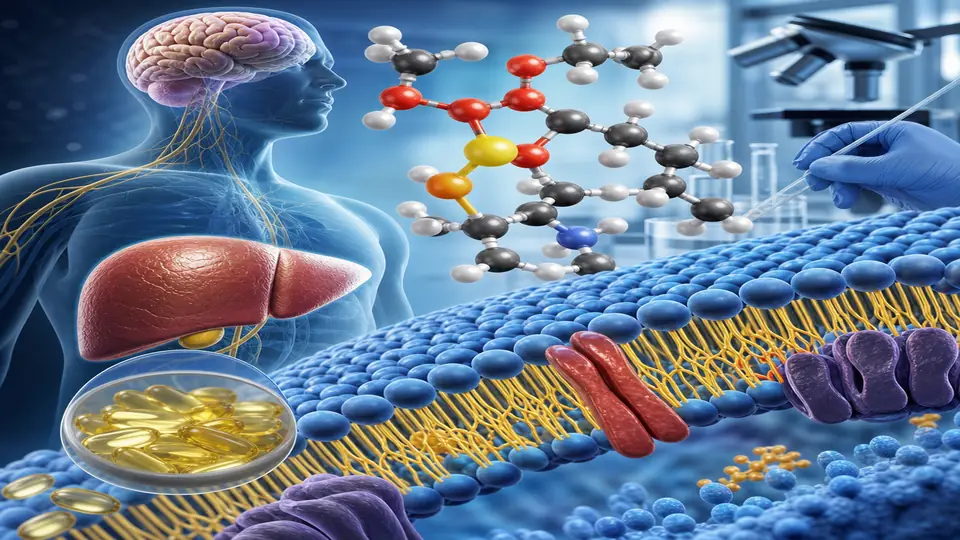
Phosphatidylcholine (PC) rarely gets the spotlight it deserves in integrative medicine conversations dominated by newer molecules like NMN or spermidine. Yet in many ways, PC is more foundational than any of them. It constitutes roughly 40% of all mammalian cell membranes, is the backbone of VLDL particles that export fat from the liver, and is the rate-limiting substrate for acetylcholine synthesis in the brain. When I evaluate patients with fatty liver, post-COVID brain fog, or chemical toxicity syndromes, phosphatidylcholine insufficiency is frequently part of the picture — even when standard labs appear entirely normal.
What Phosphatidylcholine Actually Does in the Body
PC is a glycerophospholipid: two fatty acid chains anchored to a glycerol backbone, linked via a phosphocholine head group. This architecture makes it uniquely suited to form the bilayer structure of cell membranes — simultaneously hydrophilic at the surface and hydrophobic at the core. That structural versatility is why PC ends up in virtually every tissue of clinical relevance.
The Liver’s Dependence on PC
The liver is the most PC-intensive organ by metabolic demand. Hepatocytes rely on PC to accomplish three tasks that are fundamental to metabolic health:
Fat export from the liver. PC is an essential structural component of very-low-density lipoprotein (VLDL) particles. Without sufficient PC, the liver cannot assemble and secrete VLDL, causing triglycerides to accumulate within hepatocytes. This is one of the central mechanisms driving non-alcoholic fatty liver disease (NAFLD) and alcoholic steatohepatitis. Animal knockout models in which the PEMT (phosphatidylethanolamine N-methyltransferase) gene is silenced develop severe hepatic steatosis on a choline-deficient diet — a model that mirrors what occurs in patients with combined methyl-donor insufficiency and low dietary choline.
Biliary integrity. Bile is approximately 90% PC by phospholipid content. Bile’s detergent action — which emulsifies dietary fats and enables fat-soluble vitamin absorption — depends on adequate biliary PC concentrations. Deficiency predisposes to cholesterol crystal precipitation, gallstone formation, and bile duct inflammation.
Phase II detoxification. The efficiency of cytochrome P450 enzymes and downstream conjugation reactions (glucuronidation, sulfation, glutathione conjugation) depends partly on the fluidity and integrity of endoplasmic reticulum membranes. Depleted PC impairs the liver’s capacity to process xenobiotics, heavy metals, and endogenous metabolic byproducts.
A landmark RCT in patients with alcoholic liver disease demonstrated that polyunsaturated phosphatidylcholine (1.5 g/day over 24 months) significantly attenuated hepatocyte damage and fibrosis progression compared to placebo. This data, combined with mechanistic work in NAFLD animal models, forms the clinical basis for PC supplementation in liver-compromised patients.
Brain Function and the Cholinergic System
The brain is the second major site of PC demand. Here, PC serves a dual role: structural (comprising 30–45% of neuronal membrane phospholipids) and metabolic (as the primary choline donor for acetylcholine synthesis via the CDP-choline pathway).
Acetylcholine is indispensable for hippocampal long-term potentiation and memory consolidation, executive function and sustained attention, and autonomic regulation including heart rate variability. As we age — or following illness-driven neuroinflammation such as Lyme disease or post-COVID syndrome — the CDP-choline cycle slows and membrane turnover in high-demand neuronal environments is compromised. Supplemental PC provides the raw choline substrate to maintain acetylcholine synthesis when endogenous production falters. This is why I position PC differently from alpha-GPC or CDP-choline alone: those are faster-acting cholinergic boosters, whereas PC is upstream structural support.
Phosphatidylcholine vs. Other Choline Forms: Why the Form Matters
Plain choline supplements (choline bitartrate, choline chloride) are inexpensive and raise serum choline efficiently — but carry caveats that matter for long-term use.
The TMAO problem. Free choline is converted by gut bacteria to trimethylamine (TMA), which the liver oxidizes to trimethylamine N-oxide (TMAO). Elevated TMAO is robustly associated with accelerated atherosclerosis and cardiovascular risk in epidemiological data. Phosphatidylcholine-bound choline largely bypasses this gut bacterial conversion pathway and produces substantially less TMAO. For patients with cardiovascular risk or significant dysbiosis, this distinction matters.
Phosphatidylcholine vs. phosphatidylserine (PS). These are frequently confused in marketing materials. PS is preferentially concentrated on the cytoplasmic face of neuronal membranes and has well-documented evidence for reducing cortisol and supporting working memory specifically. PC plays a more upstream architectural role — as the dominant membrane scaffold and choline reservoir throughout the body. They address overlapping but distinct physiological needs; I often use both in complex neurological patients.
Lecithin. Commercial lecithin (soy or sunflower) is roughly 20–30% PC by weight. It is a viable dietary source but requires 5–10× higher gram quantities than purified PC softgels to achieve equivalent clinical effect. Sunflower lecithin is preferred for patients with soy sensitivity or those concerned about phytoestrogen exposure.
Who Benefits Most from Phosphatidylcholine Supplementation
Fatty Liver and Metabolic Liver Disease
Patients with NAFLD, NASH, or persistently elevated transaminases without a clear alternative explanation frequently have suboptimal PC synthesis. The PEMT pathway — the liver’s endogenous route to synthesizing PC from phosphatidylethanolamine — is critically dependent on methyl donors (folate, B12, SAMe) and estrogen signaling. Post-menopausal women and patients with MTHFR variants are therefore at structurally elevated risk for PC insufficiency independent of dietary intake.
In practice, I assess patients with fatty liver for MTHFR status, B12/folate/homocysteine, and dietary choline intake before starting PC. Where methyl donor deficiency coexists, correcting that first amplifies the PC response.
Clinical dosing for liver indication: 1,800–2,400 mg/day of purified PC (95%), divided with meals.
Post-COVID Syndrome and Membrane Disruption
Post-COVID syndrome increasingly appears to involve disruption of lipid raft microdomains — cholesterol- and sphingomyelin-rich membrane platforms that organize signaling receptors including ACE2. PC is a key structural component of these rafts. Restoring PC availability may support membrane homeostasis in the context of ongoing spike protein–mediated lipid disruption. Large RCT data in post-COVID populations are still forthcoming, but the mechanistic rationale and early clinical observations support inclusion in a membrane support protocol.
I often combine PC with nattokinase and omega-3 phospholipids as part of a post-COVID vascular and membrane rehabilitation stack.
Cognitive Decline and Neurodegeneration Risk
Choline intake in Western diets is chronically below the Adequate Intake (AI) of 425–550 mg/day, particularly in individuals who avoid eggs. Observational data from the Framingham Heart Study Offspring cohort found that higher choline intake was associated with better cognitive performance across multiple domains, with the most pronounced associations in visual memory and executive function. A separate Norwegian cohort study found plasma choline independently predicted cognitive test performance after adjusting for B vitamins.
For patients with mild cognitive impairment or strong family history of Alzheimer’s disease, I prioritize PC alongside omega-3 DHA, lion’s mane mushroom, and GlyNAC as components of a neuroprotection stack.
Heavy Metal Chelation Support
During DMPS or DMSA chelation protocols, mobilized heavy metals generate oxidative stress that damages cell membranes as metals transit through tissues before urinary excretion. Providing PC during chelation rounds supports membrane recovery and attenuates the fatigue and neurological sensitivity that some patients experience post-chelation. This application sits ahead of formal clinical evidence, but the mechanistic rationale is sound and aligns with my clinical observations over years of chelation practice.
Intravenous Phosphatidylcholine: PLAQUEX Therapy
IV phosphatidylcholine — delivered as PLAQUEX infusions, originally developed in Eastern European integrative clinics — is used at our clinic in Germany for more aggressive membrane repair when oral supplementation is insufficient.
Proposed mechanisms include direct incorporation of PC into arterial wall and hepatocyte membranes at concentrations not achievable orally, reduction of small dense LDL with improvements in LDL particle size distribution, hepatoprotective effects in advanced steatohepatitis, and mobilization of arterial cholesterol deposits via LCAT (lecithin-cholesterol acyltransferase) activation.
IV PLAQUEX typically requires a series of 10–20 infusions administered over several weeks. I use it selectively: primarily in patients with documented coronary artery disease, severe NAFLD unresponsive to oral PC after 3 months, or as a component of post-COVID vascular rehabilitation in complex cases where oral approaches have been insufficient.
Dosing, Forms, and Practical Guidance
| Form | PC Content | Best For | Notes |
|---|---|---|---|
| Sunflower lecithin granules | ~22% PC | Budget-conscious, GI-tolerant patients | 15–20 g/day for therapeutic dose |
| Soy lecithin softgels | 22–30% PC | Standard maintenance | Confirm soy tolerance first |
| Purified PC softgels (95%) | 95% PC | Clinical-grade supplementation | 1,200–2,400 mg/day |
| IV PLAQUEX | 100% PC | Vascular disease, advanced NAFLD | Clinic-only series |
Starting protocol. Begin at 600 mg with breakfast and increase to 1,200–2,400 mg/day over two weeks based on GI tolerance. Taking PC with meals reduces nausea and improves absorption, as dietary fats facilitate micellar incorporation in the small intestine.
Assessment window. For liver indications, I reassess at 3 months with repeat liver enzymes and FibroScan where available. For cognitive support, 6 months is a reasonable minimum trial window given the slower timescale of membrane turnover.
Synergistic combinations. PC works well alongside methyl donors (methylfolate, methylcobalamin) that support the PEMT synthesis pathway; omega-3 fatty acids, particularly DHA, which integrate into membranes alongside PC and enhance membrane fluidity; and antioxidants such as vitamin E, NAC, and alpha-lipoic acid that protect newly synthesized membranes from lipid peroxidation.
Safety Profile
Phosphatidylcholine has an excellent clinical safety record. Reported side effects are minor:
Fishy odor. Occurs in a minority of patients at doses above 3 g/day due to choline-to-trimethylamine conversion. Switching to a DHA-enriched PC form or reducing the dose to 1,200 mg/day typically resolves this. Patients with TMAO-sensitive cardiovascular profiles may benefit from baseline TMAO measurement.
GI discomfort. Loose stools or mild nausea at initiation, consistently mitigated by taking PC with food. Starting at a lower dose and titrating up resolves this in the majority of cases within 1–2 weeks.
Drug interactions. No clinically significant interactions have been established. The theoretical concern that PC-mediated microsomal enzyme upregulation could enhance acetaminophen toxicity is not supported by clinical evidence at standard supplementation doses.
PC does not accumulate to toxic levels under normal circumstances, as excess is incorporated into membranes or metabolized through normal phospholipid turnover pathways. There are no established upper intake limits, and doses up to 7.5 g/day have been used in clinical trials without serious adverse events.
Related Articles
- NAC vs. Glutathione: Which Antioxidant Does Your Liver Actually Need?
- TUDCA: The Bile Acid Supplement That Supports Liver and Mitochondrial Health
- Alpha-Lipoic Acid: The Universal Antioxidant for Metabolic and Liver Health
- Heavy Metal Chelation Protocol: A Physician’s Step-by-Step Guide
- Post-COVID Microclots and the Vascular Repair Framework
References
- Lieber CS, et al. Phosphatidylcholine protects against fibrosis and cirrhosis in the baboon. Gastroenterology. 1994;106(1):152-159. PMID: 8276177
- Zeisel SH. Choline: critical role during fetal development and dietary requirements in adults. Annu Rev Nutr. 2006;26:229-250. PMID: 16848706
- Tang WH, et al. Intestinal microbial metabolism of phosphatidylcholine and cardiovascular risk. N Engl J Med. 2013;368(17):1575-1584. PMID: 23614584
- Küllenberg D, et al. Health effects of dietary phospholipids. Lipids Health Dis. 2012;11:3. PMID: 22221489
- Nurk E, et al. Plasma free choline, betaine and cognitive performance: the Hordaland Health Study. Br J Nutr. 2013;109(3):511-519. PMID: 22717142
- Bekdash RA. Choline, the brain and neurodegeneration: insights from epigenetics. Front Biosci (Landmark Ed). 2018;23:1113-1143. PMID: 29293420
- Korsmo HW, et al. Choline and 1-Carbon Metabolism: A Union of Phosphatidylcholine Metabolism, Methylation, and Epigenetic Regulation in Development. Nutrients. 2019;11(8):1940. PMID: 31426316
- Buchman AL, et al. Lecithin increases plasma free choline and decreases hepatic steatosis in long-term total parenteral nutrition patients. Gastroenterology. 1992;102(4 Pt 1):1363-1370. PMID: 1551540